2026-08-17 · Tom Ramirez
Managing Hard Water Buildup in Chicago Heights Plumbing
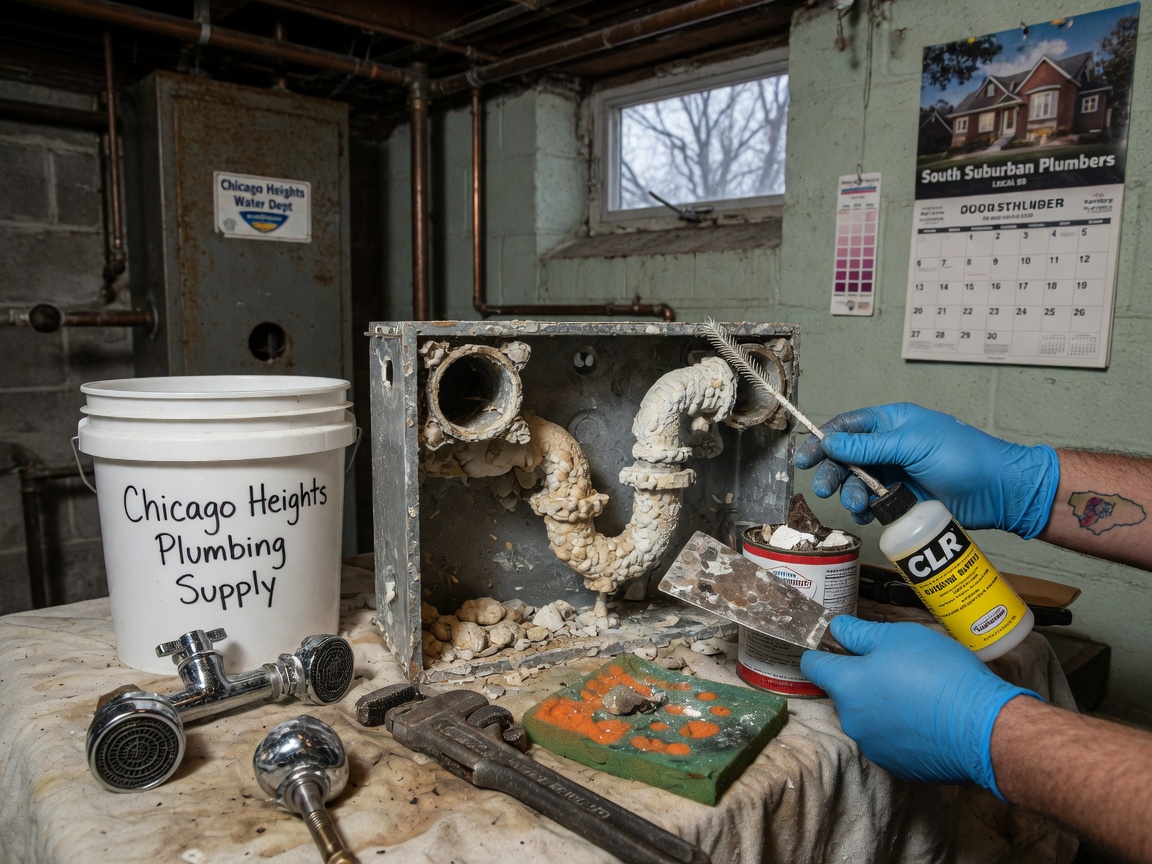
Hard water buildup in Chicago Heights plumbing typically reduces flow and heater efficiency after 5–8 years of exposure to the area's mineral-rich supply. The humid continental climate with hot summers and cold winters accelerates scaling because temperature swings cause minerals to precipitate faster inside pipes and tanks. Residents in Downtown Chicago Heights, the East Side, and West Side notice restricted showers and higher energy use first because older homes there often have galvanized lines that trap calcium and magnesium. Regular flushing and monitoring keep systems clear without unnecessary replacements.
Understanding Local Water Conditions
Chicago Heights sits in Cook County where the municipal supply carries moderate to high hardness levels year-round. Hot summer temperatures increase evaporation in outdoor lines while winter freezes push more minerals through indoor pipes during thaws. This cycle leaves scale on heating elements and in aerators faster than in softer-water regions. Homeowners on the Hilltop and in Old Chicago Heights see the effects most clearly in 40-gallon and 50-gallon water heaters that lose capacity after roughly 7 years. Testing hardness every 12–18 months reveals when levels exceed 10 grains per gallon and require intervention.
Spotting Early Signs in Chicago Heights Homes
Reduced water pressure at multiple fixtures often signals scale narrowing the lines, especially noticeable during morning peak use. White or crusty deposits around faucets and showerheads appear first in bathrooms near St. Agnes Church and the Chicago Heights Park District facilities where older plumbing is common. Water heaters that take longer to deliver hot water or produce popping sounds indicate sediment layers insulating the burner or element. Linking these symptoms to low water pressure issues helps isolate whether the problem is localized scale or a broader line restriction. Checking toilet fill valves and washing machine hoses every six months catches buildup before it forces premature part failures.
Flushing and Maintenance Steps That Work
Begin by shutting off the water heater and attaching a hose to the drain valve to remove loose sediment every 12 months. For homes on the West Side with known higher hardness, add a vinegar soak to aerators and showerheads quarterly to dissolve surface scale without harsh chemicals. Install a whole-house water softener or point-of-use filters at high-use areas such as kitchens and bathrooms when test results show consistent readings above 12 grains. Flush tank-style heaters by opening the drain valve until the water runs clear, then repeat after 30 minutes to dislodge compacted minerals. These steps extend heater life from the typical 8–12 years to closer to 15 years when performed consistently.
When Professional Help Becomes Necessary
Persistent low flow after homeowner flushing points to scale deep inside supply lines that requires specialized equipment. A leak detection and repair specialist can scope lines serving the Bloom Township Hall area without excavation. Severe heater scaling that drops efficiency below 60 percent warrants water heater repair or replacement rather than repeated acid washes that can damage glass linings. For properties near Chicago Heights Public Library showing recurring clogs tied to scale, combining drain cleaning with hardness treatment prevents repeat visits. Technicians available Mon–Fri and 24/7 on Saturday can schedule these services around work hours common in the community.
Protecting Systems Through Seasonal Changes
Winter cold snaps followed by spring thaws increase mineral movement through pipes in neighborhoods like Hilltop and Old Chicago Heights. Insulating exposed lines and maintaining 120°F heater settings reduces the rate of new scale formation during temperature swings. Review related pressure problems in the article on common causes of low water pressure in Chicago Heights to distinguish scale from other issues. Annual professional inspection before summer peaks catches early buildup in commercial buildings on the East Side. Consistent records of hardness tests and flush dates help owners in Sauk Village and nearby communities plan replacements before failures occur during peak demand.