2026-08-17 · Tom Ramirez
Garbage Disposal Troubleshooting for Chicago Heights Kitchens
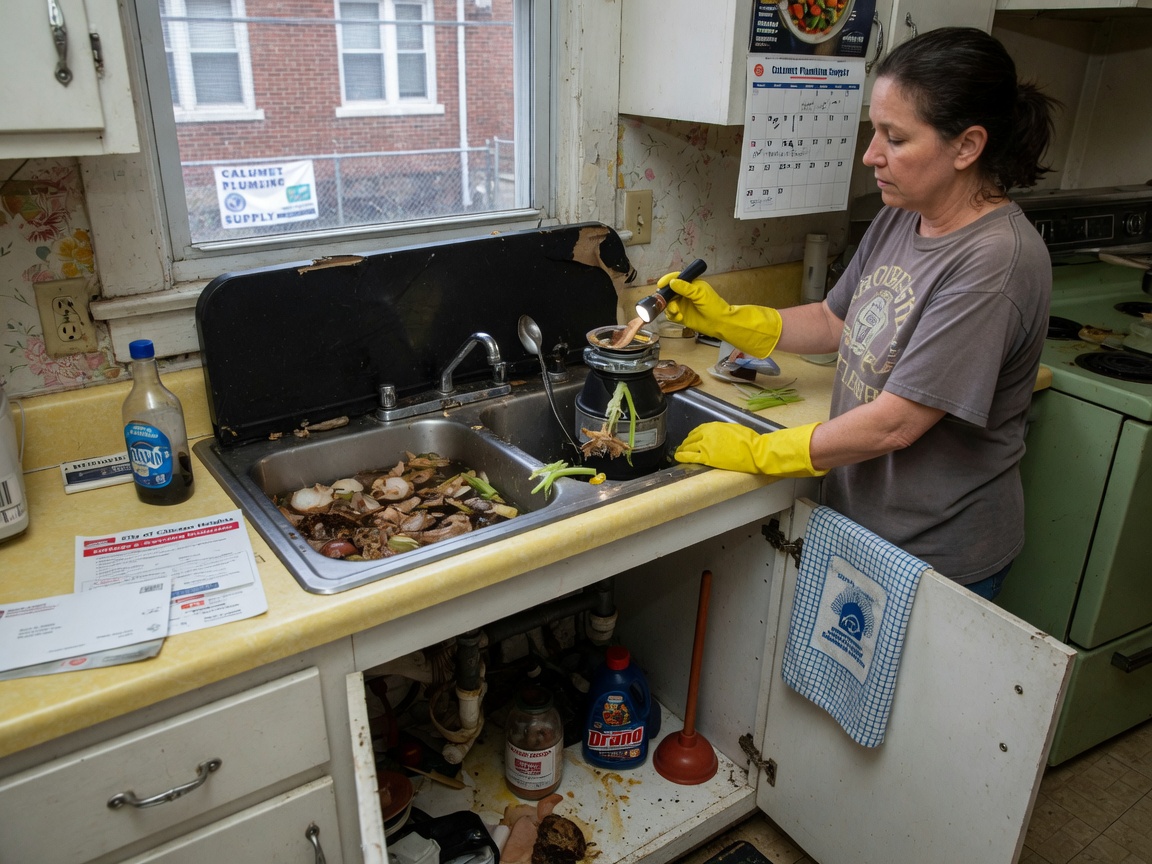
Garbage disposal troubleshooting in Chicago Heights kitchens begins with confirming power to the unit and pressing the reset button on the bottom, which resolves power-related failures in most cases before any further steps are needed. Local homes in areas like the East Side and West Side often see these units handle heavy loads from family meals, and the humid continental climate with cold winters can contribute to slower drains when grease solidifies. Checking the circuit breaker first prevents unnecessary calls and keeps repairs focused on actual mechanical issues rather than electrical ones.
Common Garbage Disposal Problems in Local Kitchens
Chicago Heights residents in neighborhoods such as Hilltop and Old Chicago Heights frequently encounter jammed impellers from fibrous vegetable scraps or small bones that slip past the grind stage. Hard water common in Cook County accelerates mineral buildup on the blades and flywheel, shortening effective lifespan to 8–12 years in many installations. Leaks at the sink flange or discharge pipe appear after 5–7 years of service when rubber gaskets degrade from repeated hot and cold cycles. Noises like grinding or humming often signal a foreign object lodged against the rotating plate rather than a full motor failure. These patterns show up consistently in kitchens near Chicago Heights Public Library and Bloom Township Hall where older homes still use standard 1/2-horsepower models.
Step-by-Step Reset and Clearing Procedures
Start by turning off the power at the breaker and using tongs or pliers to remove visible debris from the chamber without reaching inside. Press the red reset button firmly until it clicks, then restore power and test with cold water only. For persistent jams, insert a 1/4-inch Allen wrench into the bottom hex socket and rotate clockwise then counterclockwise several times to free the flywheel. Run the unit for 10–15 seconds with a steady stream of cold water to flush particles toward the trap. Avoid chemical cleaners that can damage internal seals and instead use ice cubes with rock salt once monthly to scour the grind chamber. These steps address 70–80% of service calls without parts replacement.
Signs Professional Service Is Required
Persistent humming after reset attempts usually indicates a seized motor or damaged start capacitor that requires replacement rather than further homeowner attempts. Water pooling under the unit points to failed sink flange gaskets or cracked housings, both of which need full disassembly best handled by a plumber familiar with Chicago Heights plumbing layouts. Foul odors that return within days after cleaning often trace to buildup in the trap or vent line that standard flushing cannot reach. In these situations, contact Chicago Heights Plumbing Pros during business hours Mon–Fri or on Sat for 24/7 Open response when the issue affects daily kitchen use. Delaying repair risks sewage backup into the sink or damage to connected dishwasher drains.
Preventing Future Issues in Chicago Heights Homes
Install a 3/4-horsepower or higher model when replacing units in homes built before 1980 to better handle the volume typical in family kitchens across the Hilltop and Downtown Chicago Heights areas. Run cold water for 30 seconds before and after each use to solidify grease and carry it away. Scrape plates thoroughly and avoid putting coffee grounds, pasta, or eggshells down the disposal. Schedule annual inspections through Kitchen Plumbing Repair to catch early wear on seals before leaks develop. Pair this with guidance from Managing Hard Water Buildup in Chicago Heights Plumbing to address mineral scaling that affects both disposals and supply lines. For units nearing the end of their 8–12 year service life, consider Garbage Disposal Installation And Repair before a complete failure occurs during peak summer usage.