2026-08-17 · Tom Ramirez
How to Check for Hidden Plumbing Leaks at Home
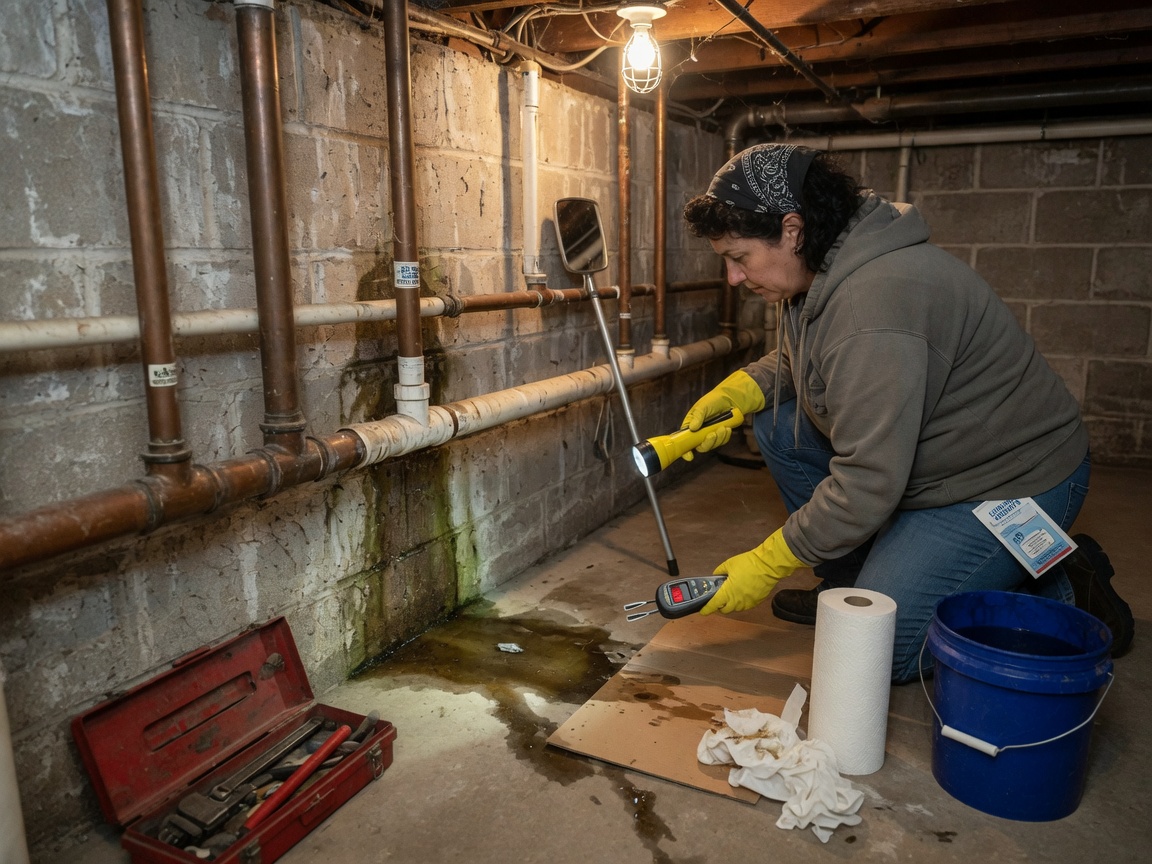
You can locate most hidden plumbing leaks by testing your water meter for movement with all fixtures off, scanning for damp drywall or floors, and listening for faint running sounds, often confirming problems in under an hour of focused inspection.
Start with a Water Meter Test
Turn off every faucet, shower, and appliance that uses water. Locate the meter near the street or in the basement and note the reading. Wait 30 minutes without using any water, then check again. Any movement indicates a leak somewhere in the line. In Chicago Heights homes built before 1970, older galvanized pipes in basements often show this movement first during cold winter months when contraction stresses joints. Repeat the test at night when usage drops naturally. This method catches leaks as small as one gallon per hour that would otherwise go unnoticed until the next bill arrives.
Inspect Walls, Floors, and Ceilings
Walk through each room and feel for soft spots in drywall or flooring, especially near bathrooms and kitchens. Look for peeling paint, brownish stains on ceilings, or musty odors along baseboards. In neighborhoods like Old Chicago Heights and the East Side, slab foundations can hide leaks under concrete that migrate toward the Chicago Heights Public Library area after heavy summer rains. Check around water heaters and under sinks with a flashlight. Mark any suspicious area with tape and monitor it for 24 hours to see if moisture spreads. These visual clues appear weeks before visible puddles form.
Listen and Use Basic Tools
Turn off all background noise and place your ear against walls near plumbing runs. A continuous hissing or dripping sound points to a leak behind the surface. Place a dry paper towel on accessible pipes overnight to check for moisture. In humid continental conditions here, cold winters can cause pipes to sweat, so compare readings across multiple days. For slightly more precision, inexpensive moisture meters available at hardware stores give numeric readings above 15 percent on drywall that signal hidden water. Focus first on areas around toilets and showers where supply lines commonly fail after 8–12 years.
Track Bills and Know When to Escalate
Compare your last three water bills for sudden increases of 20 percent or more without added usage. Consistent spikes often trace to underground lines in West Side or Hilltop properties. If meter tests show movement but you cannot pinpoint the source, contact a local plumber for electronic leak detection. Our team at Chicago Heights Plumbing Pros offers Leak Detection And Repair during Mon–Fri business hours and remains available 24/7 on Saturdays. Readers facing recurring drain issues may also find value in Safe Ways to Unclog Drains Without Harsh Chemicals or How to Spot Early Signs of a Sewer Line Problem. Early detection keeps repair costs between $400 and $1,500 instead of full slab replacements.